• Space is limited and offered on a first-come, first-served basis.
• IN-PERSON attendance only.
• Includes Lunch and 1 Coffee Break on Friday, March 5, 2027.
• Bring a laptop for hands-on exercises.

THE PROGRAM DIRECTOR'S AI WORKFLOW REGISTRATION RATES

AGENDA | LEARNING OBJECTIVES | DISCLOSURE | CME CREDIT
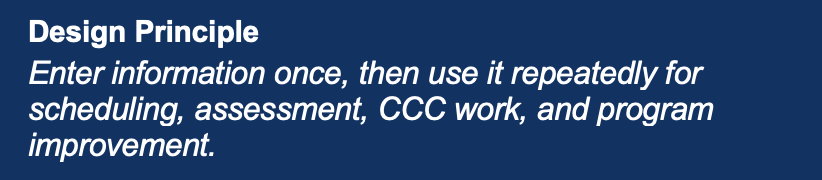
Reduce the administrative load. Keep the judgment where it belongs.
This hands-on workshop shows fellowship program leaders how to build an AI-supported workflow for the recurring administrative work of running a fellowship, while keeping program director judgment, oversight, and accountability central. Rather than surveying general productivity tools, the course follows the fellowship administrative cycle from start to finish scheduling, rotation evaluations, milestone mapping, CCC preparation, the Annual Program Evaluation, and strategic planning.
Assessment is a central thread. Participants will learn to shorten rotation evaluations to what each rotation can genuinely observe, map items to EPAs and milestones once, and use AI to organize evidence for the CCC. Program leadership verifies that evidence and makes every assessment decision.
AGENDA
FRIDAY, MARCH 7, 2027
All times shown are in MOUNTAIN Time Zone
| POST-COURSE CHECK-IN AND LUNCH |
| 12:30 - 1:30 PM |
All Attendees |
| GENERAL SESSIONS |
| 1:30 - 1:50 PM |
Opening Session
What AI Can and Cannot Do Safely in Fellowship Administration |
| 1:50 - 2:40 PM |
Workshop
Schedule Building and Schedule Revision in Excel
|
| 2:40 - 3:30 PM |
Workshop
Smarter Assessment: Shortening Rotation Evaluations and Mapping to EPAs and Milestones
|
| 3:30 - 3:45 PM |
Networking Break |
| 3:45 - 4:35 PM |
Workshop
CCC Preparation and Fellow Letters
|
| 4:35 - 5:25 PM |
Workshop
From Data to Action: The APE, SWOT Analysis, and Program Improvement Planning
|
| 5:25 - 5:55 PM |
Hands-on Build
Build Your First AI-Enabled Administrative Workflow |
Back to top
LEARNING OBJECTIVES
Upon completion of this course, participants will be able to:
- Describe what AI can and cannot do safely in fellowship administration, including privacy, governance, and institutional approval requirements.
- Build and revise fellowship schedules around rotation requirements, vacation, call, equity, and coverage constraints.
- Redesign rotation-specific evaluations and map evaluation items to EPAs, sub competencies, and milestones.
- Synthesize assessment data into CCC summaries and fellow letters, with program leadership verifying evidence and decisions.
- Convert Annual Program Evaluation inputs into a SWOT analysis and a prioritized improvement plan.
- Build a first AI-enabled administrative workflow for use at their home program.
PARTICIPANT TAKEAWAYS
- A vetted prompt for each selected workflow
- A clean input template that protects consistency and simplifies review
- An example output tailored to fellowship administration
- A short checklist of elements requiring program director review and approval
TARGETED LEARNERS
This program is targeted towards fellowship and graduate medical education leaders who are serving or aspire to serve in medical education leadership, including participation in the administration of a fellowship program.
- Fellowship Program Directors and Associate Program Directors
- Core Faculty with Program Administration Roles
- Program Coordinators
Back to top
DISCLOSURE DECLARATION
As a jointly accredited provider, the University of Nebraska Medical Center (UNMC) must ensure balance, objectivity, independence, and scientific rigor in its educational activities. Faculty are encouraged to provide a balanced view of therapeutic options by utilizing either generic names or the trade names of several to ensure impartiality.
All speakers, planning committee members and others in a position to control continuing education content participating in a UNMC-accredited activity are required to disclose relationships with commercial interests. A commercial interest is any entity producing, marketing, re-selling, or distributing health care goods or services consumed by, or used on, patients. Disclosure of these commitments and/or relationships is included in these activity materials so that participants may formulate their own judgments in interpreting its content and evaluating its recommendations.
This activity may include presentations in which faculty may discuss off-label and/or investigational use of pharmaceuticals or instruments not yet FDA-approved. Participants should note that the use of products outside currently FDA-approved labeling should be considered experimental and are advised to consult current prescribing information for FDA-approved indications.
All materials are included with the permission of the authors. The opinions expressed are those of the authors and are not to be construed as those of UNMC.
Back to top
CONTINUING EDUCATION AND MOC CREDIT

In support of improving patient care, this activity has been planned and implemented by University of Nebraska Medical Center and the Association of Pulmonary and Critical Care Medicine Program Directors. University of Nebraska Medical Center is jointly accredited by the Accreditation Council for Continuing Medical Education (ACCME), the Accreditation Council for Pharmacy Education (ACPE), and the American Nurses Credentialing Center (ANCC) to provide continuing education for the healthcare team.
The University of Nebraska Medical Center designates this live activity for a maximum of 4.5 AMA PRA Category 1 Credits™. Physicians should claim only the credit commensurate with the extent of their participation in the activity.
Maintenance of Certification (MOC)
Successful completion of this CME activity, which includes participation in the evaluation component, enables the participant to earn up to 4.5 Medical Knowledge MOC points in the American Board of Internal Medicine Maintenance of Certification (MOC) program.
It is the CME activity provider's responsibility to submit participant completion information to ACCME for the purpose of granting ABIM MOC credit.
Back to top
|